
Call us:
+442036084550
Monday-Sunday (24 Hours)


 2026-06-22
James Smith
Have you ever noticed how much time is wasted searching for tools, locating documents, or working around unnecessary clutter? Even small inefficiencies can add up, affecting productivity, quality, and employee morale. Organisations that consistently achieve operational excellence understand that an organised workplace is the foundation of efficient performance. This is where the 5S Methodology comes into play.
The 5S Methodology is a Lean Management approach designed to create clean, organised, and efficient work environments. It helps organisations reduce waste, improve safety, and streamline daily operations. In this blog, we will explore the meaning of 5S, its core principles, benefits, and practical steps for successful implementation.
The 5S Methodology is a Lean Management approach that helps organisations create organised, efficient, and productive workplaces. Originating from the Japanese manufacturing industry and the Toyota Production System, it is based on five principles: Sort, Set in Order, Shine, Standardise, and Sustain.
More than a housekeeping method, 5S provides a structured framework for reducing waste, improving workflow, enhancing safety, and maintaining workplace discipline. By making inefficiencies easier to identify, it supports continuous improvement, higher productivity, improved quality, and stronger operational performance.
5S supports continuous improvement by creating a structured and organised workplace, with each stage building upon and reinforcing the previous one:
1) Sort (Seiri): Review workplace items and eliminate anything that is not required for routine tasks. Removing unnecessary materials helps create a more organised environment and makes better use of available space.
2) Set in Order (Seiton): Arrange tools, equipment, and materials so they are easy to find, access, and return. Clear labelling and designated locations help improve workflow efficiency.
3) Shine (Seiso): Clean and inspect work areas regularly to maintain a safe and productive environment while identifying potential issues before they become problems.
4) Standardise (Seiketsu): Establish consistent procedures, visual controls, and workplace standards to ensure the first three steps are maintained across the organisation.
5) Sustain (Shitsuke): Encourage discipline, regular audits, and continuous improvement so that 5S practices become part of the organisational culture.
6) Supports Continuous Improvement: By creating an organised and standardised workplace, 5S provides the foundation for other Lean initiatives and long-term operational improvements.
The 5S Methodology follows a logical sequence of five steps that work together to create and maintain an organised workplace. This structured sequence ensures consistency, efficiency, and long-term sustainability of improvements.
The 5S Methodology originates from five Japanese words that describe key workplace organisation practices:
1) Seiri (??): Focuses on identifying and removing unnecessary items from the workplace.
2) Seiton (??): Involves arranging essential items so they are easy to find, use, and return.
3) Seiso (??): Encourages regular cleaning and inspection of the work environment.
4) Seiketsu (??): Establishes standards and procedures to maintain workplace organisation.
5) Shitsuke (?): Promotes discipline and continuous adherence to established standards.
The Japanese terms are commonly translated into five English principles that form the foundation of the methodology:
1) Sort: Remove unnecessary items and keep only what is needed.
2) Set in Order: Organise tools, equipment, and materials for easy access and efficient workflow.
3) Shine: Clean and inspect work areas regularly to maintain safety and performance.
4) Standardise: Create consistent processes and visual controls to sustain improvements.
5) Sustain: Develop habits and practices that ensure long-term compliance and continuous improvement.
Together, these five principles create a structured framework for maintaining an efficient, safe, and productive workplace. This framework supports long-term operational excellence and continuous improvement across the organisation.
The 5S Methodology originated in Japan and became widely known through the Toyota Production System (TPS) in the 1950s. Developed to improve workplace organisation, efficiency, and quality, it is rooted in the principles of discipline and continuous improvement. Today, 5S is a globally recognised Lean management tool used across industries to reduce waste and enhance productivity.
1) Seiri (Sort): Eliminate excess
2) Seiton (Set in Order): Create order
3) Seiso (Shine): Maintain cleanliness
4) Seiketsu (Standardise): Establish standards
5) Shitsuke (Sustain): Build discipline
Develop expertise in lean workflows with Value Stream Mapping Course – Register now!
Implementing 5S requires more than simply tidying a workspace. Each step builds on the previous one. Below are five steps to implement the 5S Principles. Following this structured approach helps organisations achieve long-term efficiency and workplace discipline.
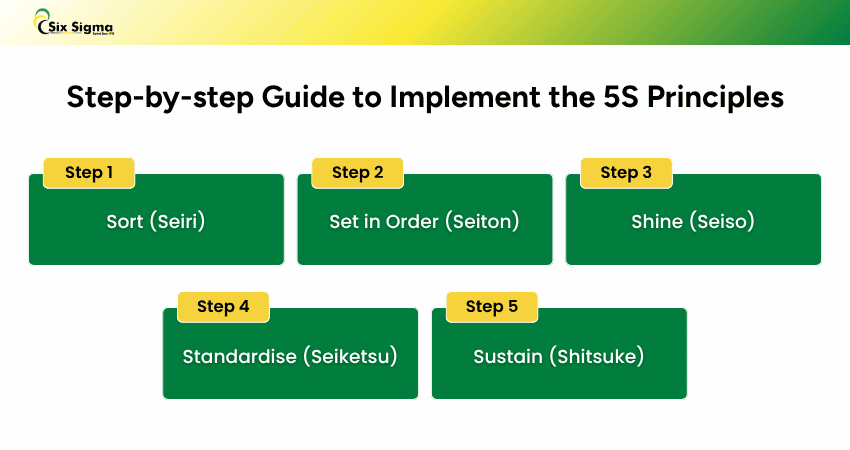
Begin by reviewing everything in the workplace and identifying what is necessary and what is not. Remove unused tools, outdated materials, duplicate items, and anything that does not support daily operations. The goal is to eliminate clutter and create a workspace that contains only essential resources. This makes work areas safer, more organised, and easier to manage.
Once unnecessary items have been removed, organise the remaining tools, equipment, and materials according to how frequently they are used. Assign designated locations, use labels, and implement visual controls to ensure items are easy to find and return. A well-organised workspace reduces wasted motion and helps employees perform tasks more efficiently.
Clean the workplace thoroughly and establish regular cleaning routines. During this process, inspect equipment, workstations, and tools for signs of wear, damage, or potential issues. Shine is not only about cleanliness; it also helps identify problems early, supporting safer and more reliable operations. Regular cleaning also promotes accountability and maintains a professional work environment.
Create clear procedures and standards to maintain the improvements achieved through the first three steps. Develop checklists, visual guides, schedules, and standard operating procedures that define how workplace organisation and cleaning activities should be carried out. Standardisation ensures consistency across teams and departments. This step helps embed best practices and ensures uniformity across the organisation.
Embed 5S into the organisational culture by encouraging discipline, accountability, and continuous improvement. Conduct regular audits, provide ongoing training, and involve employees in identifying opportunities for improvement. Sustaining the process ensures that workplace organisation becomes a long-term habit rather than a short-term initiative.
Successful 5S implementation depends on employee engagement and long-term commitment. Below are four ways to encourage 5S Buy-in and Participation:
Create a clear implementation roadmap that outlines objectives, responsibilities, and milestones for each stage of the 5S process. This helps employees understand what needs to be achieved and when. Breaking the 5S initiative into manageable stages allows teams to maintain momentum throughout the implementation process.
Use digital tools to simplify 5S activities and improve visibility. Technology can make 5S activities easier to manage and sustain. Digital tools can support workplace audits, track improvement actions, monitor compliance, and provide real-time visibility into performance, helping organisations maintain consistency across teams and locations.
Leadership commitment plays a critical role in the success of any 5S initiative. When managers actively participate, communicate its importance, and model expected behaviours, employees are more likely to engage with the process and view it as a long-term organisational commitment. Strong leadership involvement builds trust and reinforces the importance of 5S practices.
Recognise and reward individuals or teams that consistently apply 5S principles and contribute to workplace improvements. Awards, certificates, recognition programmes, or public acknowledgements can motivate employees to maintain high standards and encourage healthy competition. Recognition also boosts morale and encourages continuous participation in improvement activities.
Discover the Principles of Lean with the Introduction to Lean Training – Join now!
The 5S methodology helps manufacturers create a clean, organised, and efficient workplace by eliminating waste and improving workflow. It enhances productivity, workplace safety, product quality, and overall operational performance. Below are some of the key benefits of 5S in manufacturing:
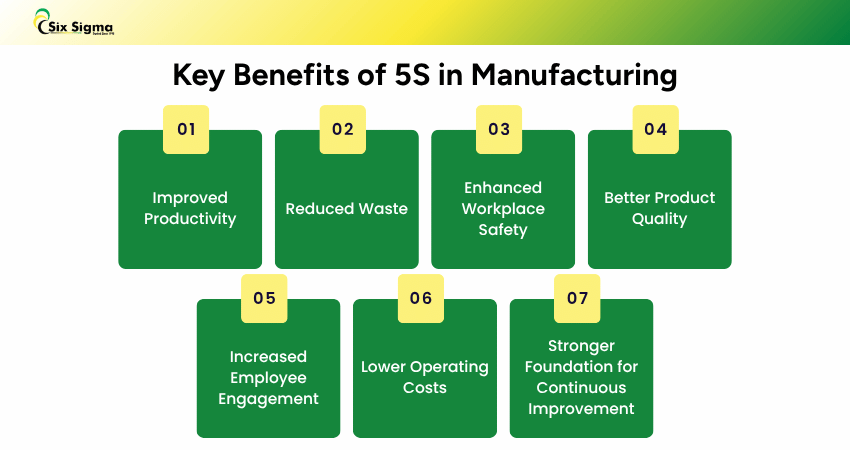
An organised workplace reduces the time employees spend searching for tools, materials, and information. With everything stored in designated locations and workflows streamlined, tasks can be completed more efficiently, leading to higher output and smoother operations.
5S helps identify and eliminate unnecessary materials, excess inventory, and inefficient practices that contribute to waste. By improving organisation and visibility, manufacturers can make better use of resources, reduce unnecessary movement, and minimise operational inefficiencies.
Clean, organised workspaces reduce the likelihood of accidents caused by clutter, misplaced equipment, or obstructed walkways. Regular cleaning and inspection activities also help identify potential hazards before they become serious safety concerns.
Standardised work practices and well-maintained work areas contribute to greater consistency in production processes. This reduces defects, improves process control, and helps manufacturers maintain higher quality standards across products and operations.
5S encourages employees to take ownership of their workspaces and actively participate in improvement initiatives. This involvement helps build accountability, boosts morale, and fosters a culture of continuous improvement throughout the organisation.
By reducing waste, improving efficiency, and preventing errors, 5S can help organisations lower operational expenses. Better resource utilisation and fewer disruptions contribute to cost savings while supporting long-term business performance.
5S creates the structured environment needed for Lean manufacturing and other improvement initiatives to succeed. With organised processes and clear standards in place, organisations are better positioned to identify opportunities for ongoing improvement and operational excellence
The 5S Methodology is more than a workplace organisation tool; it is a structured approach to improving efficiency, reducing waste, and fostering a culture of continuous improvement. By applying the five principles: Sort, Set in Order, Shine, Standardise, and Sustain organisations can create safer, more productive, and better-organised work environments. When implemented consistently, 5S helps drive operational excellence and supports long-term business success.
Build Expertise in Lean Practices with the best Lean Training – Register now!


Thank You For Your Enquiry.
Our representative will get in touch with you shortly. You can also:Call Us: +442036084550
Email Us: info@sixsigma.co.uk



 Home
Home