
Call us:
+442036084550
Monday-Sunday (24 Hours)


 2026-04-01
James Smith
Have you ever wondered why some organisations deliver faster results with fewer mistakes, while others struggle with delays and inefficiencies? The difference often lies in how they manage and improve their processes. This is where Lean Six Sigma becomes essential, as it helps businesses work smarter and achieve better outcomes.
By learning What is Lean Six Sigma, you can unlock practical ways to solve problems, reduce waste, and improve efficiency. This blog explores its key phases, techniques, and benefits, helping you enhance performance and deliver real value. Let’s explore how it works in detail!
Lean Six Sigma is a collaborative, data-driven methodology used to improve business processes by combining the strengths of Lean and Six Sigma. Lean focuses on eliminating waste and improving speed, while Six Sigma focuses on reducing variation and defects to enhance quality and ensure consistent process performance.
Together, they help organisations streamline operations, improve efficiency, and deliver consistent results. Lean Six Sigma uses a structured approach called DMAIC, which stands for Define, Measure, Analyse, Improve and Control, to identify problems, optimise processes and increase customer satisfaction and overall profitability.
Lean Six Sigma is important because it combines the strengths of Lean and Six Sigma to improve the efficiency and quality of processes. By reducing waste and minimising variation, it helps organisations optimise their processes, deliver better products and services and achieve consistent performance.
It also helps businesses streamline operations, lower costs and increase productivity without compromising on the quality. At the same time, it cements customer satisfaction and cultivates a culture of continuous improvement, thus helping organisations make better decisions and maintain a strong competitive advantage.
Lean Six Sigma follows a structured approach known as DMAIC, which stands for Define, Measure, Analyse, Improve, and Control. These phases help identify problems and improve processes using data-driven methods. The key phases are outlined below:
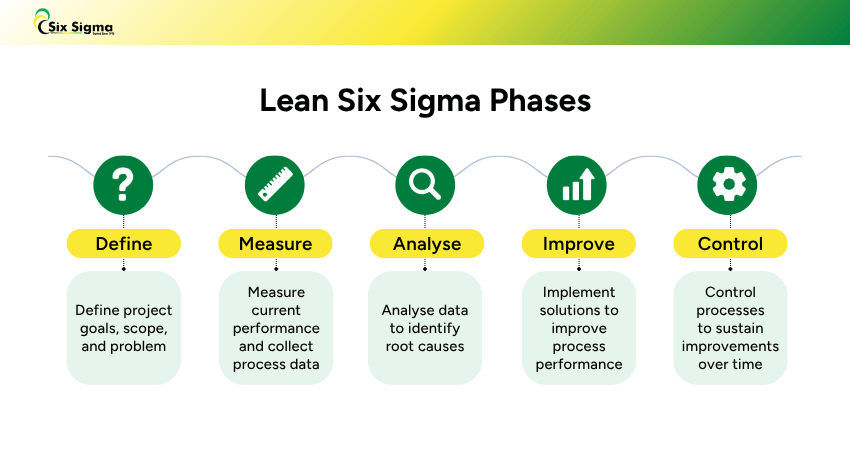
In the Define phase, a project team is established to clearly outline the problem, goals, and scope of the project. The team identifies the process to be improved and understands customer requirements, ensuring that all improvement efforts are aligned with business objectives.
The Measure phase focuses on assessing the current performance of the process. Teams collect relevant data, establish baseline metrics, and create process maps to understand workflows, helping to identify areas where inefficiencies or issues may exist.
In this phase, teams analyse the collected data to identify root causes of problems and process variations. Using analytical and statistical tools, they can determine the key factors affecting performance. This allows for informed decision-making and targeted improvements.
The Improve phase involves developing and implementing solutions based on insights gained from earlier phases. Teams use Lean tools to eliminate waste and enhance workflow, along with Six Sigma techniques to reduce variation and improve overall process quality.
In the Control phase, the focus is on sustaining improvements over time. Teams monitor performance using control plans and key metrics, ensuring that the process remains stable and that corrective actions are taken when necessary to maintain results.
Become a strategic expert driving organisation-wide process excellence through our
Lean Six Sigma Master Black Belt (MBB) Training – Join today!
Lean Six Sigma techniques are practical tools used to identify inefficiencies, reduce waste, and improve process quality. They support organisations in analysing workflows and implementing continuous improvement effectively. The key techniques are outlined below:
The Kanban method is a visual tool used to manage and track work. It uses boards and cards to show tasks, their progress, and bottlenecks in real time. This helps teams improve workflow, reduce delays, and ensure tasks are completed efficiently and with greater transparency and team collaboration.
Kaizen focuses on continuous improvement via small, incremental changes. It encourages employees at every level to suggest improvements and take part in enhancing processes. Over time, these small changes can result in significant improvements in quality, efficiency, and productivity.
Value Stream Mapping is used to visualise the entire process from start to finish. It helps identify value-adding and non-value-adding activities, making it easier to detect waste, delays, and inefficiencies across workflows. This allows organisations to redesign processes for better performance.
The 5S method is a workplace organisation technique that improves efficiency and reduces waste. It includes five steps: Sort, Set in Order, Shine, Standardise, and Sustain. This approach creates a clean, organised, and productive work environment that supports continuous improvement.
Gain essential skills to support real-world process improvement projects through the
Lean Six Sigma Yellow Belt Training – Register now!
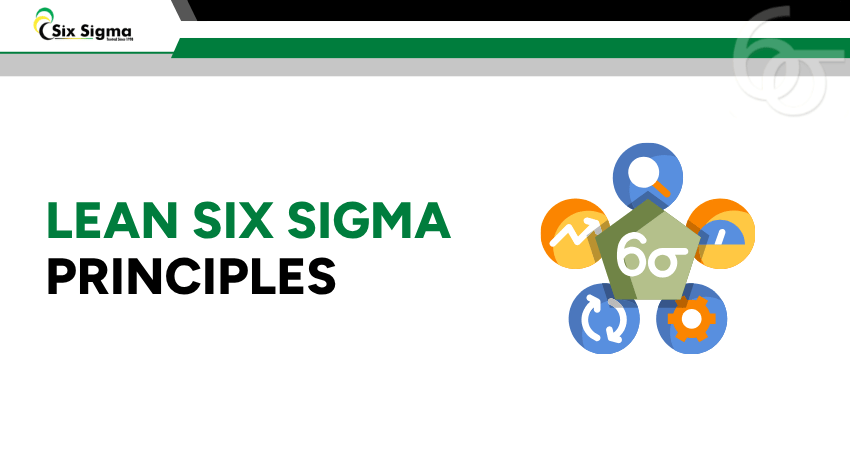
Lean Six Sigma is built on five key principles that guide organisations in improving processes, reducing defects, and delivering greater value to customers. These principles ensure that improvements are structured and effective. The key principles are outlined below:
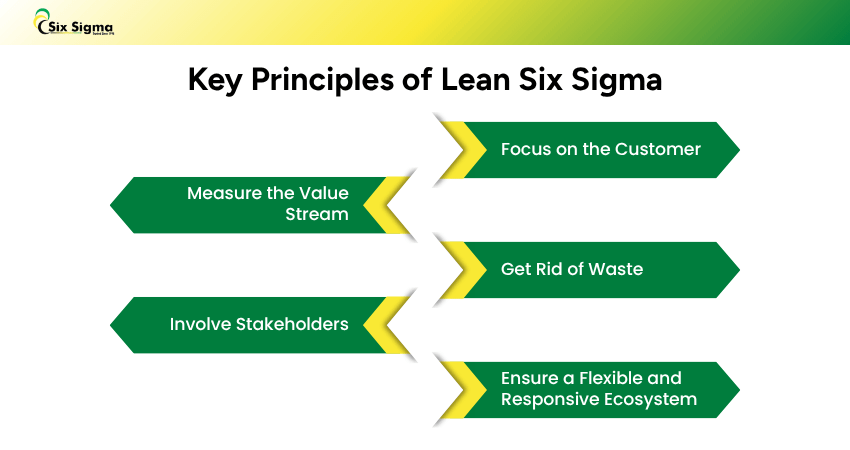
This principle places the customer at the centre of every improvement effort. Organisations must understand customer expectations and define what value means to them. By aligning processes with these needs, businesses can deliver consistent quality, improve satisfaction, and ensure that every change directly enhances the customer experience.
Measuring the value stream involves mapping the entire process to understand how value flows from start to finish. This helps identify inefficiencies, delays, and non-value-adding steps. By using data to analyse each stage, organisations gain clear insights into where improvements are needed and how performance can be enhanced.
Eliminating waste is a prime objective of Lean Six Sigma. Waste includes any activity that doesn't add value, such as unnecessary steps, delays, or excess resources. Removing waste improves efficiency, reduces costs, and streamlines processes, allowing organisations to deliver faster and more effective outcomes.
Engaging stakeholders across every level of the organisation is essential for successful implementation. When employees, Managers, and teams are involved, they bring valuable insights and take ownership of improvements. This collaboration strengthens problem-solving, supports sustainable change, and promotes a culture of continuous improvement.
Lean Six Sigma emphasises the need for adaptability in processes. A flexible system allows organisations to respond quickly to changing customer demands, market conditions, and operational challenges. By maintaining responsiveness, businesses can sustain improvements and continue evolving for long-term success.
Lean Six Sigma offers several benefits that help organisations improve performance, reduce waste, and deliver better results. By combining efficiency with quality improvement, it supports consistent growth and long-term success. The key benefits are outlined below:
Lean Six Sigma improves the quality of products and services by reducing defects and errors. By using data-driven methods, organisations can identify issues early and ensure consistent outcomes, leading to higher customer satisfaction and improved reliability.
This approach streamlines processes by removing unnecessary steps and improving workflow. It helps team’s complete tasks faster, reduce delays, and make better use of resources, resulting in smoother operations and boosted productivity across the organisation.
Lean Six Sigma helps reduce operational costs by eliminating waste and optimising processes. Organisations can save money by improving resource utilisation, minimising rework, and reducing inefficiencies, ultimately increasing profitability without compromising on quality or performance.
Advance your skills to drive complex, data-driven business improvements with the
Lean Six Sigma Black Belt Upgrade Training – Join today!
Lean Six Sigma offers certification levels, known as belt levels, that represent different levels of knowledge and responsibility in process improvement across organisations. The key belt levels are outlined below:
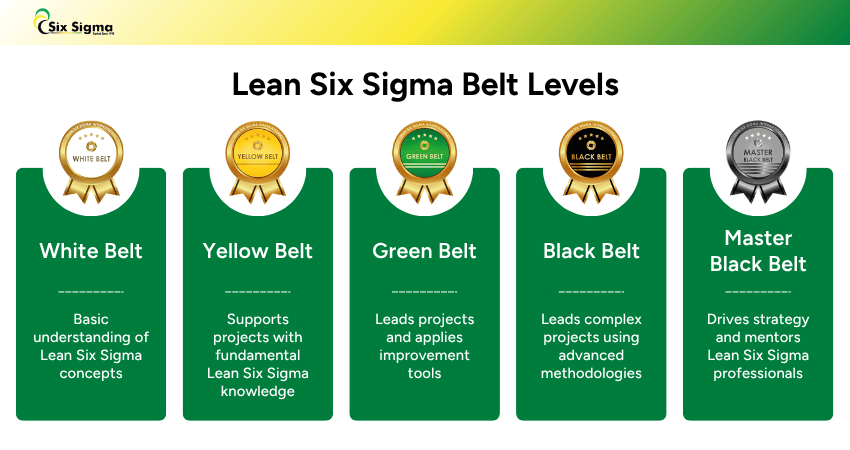
White Belts possess a basic understanding of Lean Six Sigma concepts and terminology. They support improvement initiatives by participating in projects and understanding process changes, helping organisations build awareness of continuous improvement practices at an introductory level.
Yellow Belts have a much deeper understanding of Lean Six Sigma tools and principles. They actively support project teams, assist in data collection, and contribute to problem-solving activities, helping improve processes while working under guidance from more experienced professionals.
Green Belts lead small to medium-sized improvement projects within their teams. They use Lean Six Sigma tools to analyse data, identify root causes and implement solutions, balancing project responsibilities alongside their regular job roles effectively.
Black Belts are highly skilled professionals who manage complex improvement projects across departments. They use advanced analytical tools, lead teams, mentor Green Belts, and drive significant process improvements that align with organisational goals and performance targets.
Master Black Belts are strategic leaders responsible for guiding Lean Six Sigma implementation across the organisation. They provide training, mentorship, and oversight, ensuring projects align with business objectives and fostering a strong culture of continuous improvement.
In essence, understanding What is Lean Six Sigma empowers organisations to improve processes, enhance quality, and reduce costs effectively. By applying its phases, techniques, and principles, businesses can drive continuous improvement, boost efficiency, and deliver greater value, positioning themselves for sustainable growth and long-term success.
Develop leadership skills and solve real-world business problems effectively with the Lean Six Sigma Training – Join now!


Thank You For Your Enquiry.
Our representative will get in touch with you shortly. You can also:Call Us: +442036084550
Email Us: [email protected]



 Home
Home